

The NFL’s salary cap is essentially a game, one that can take even die-hard fans years to master. The numbers can be manipulated in a variety of ways, and the league’s best general managers live in the sweet spot between crafting the best roster possible for the present, while also setting the franchise up for success in the future.
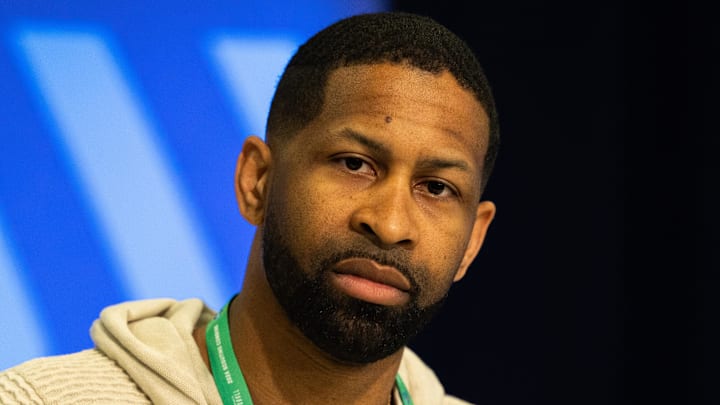
Despite their ongoing struggles to win the real games on the field, the Cleveland Browns have one of the league’s better cap gurus. Few play the front office game better than Andrew Berry, whose work crafting a reasonable exit plan from the Deshaun Watson disaster, while still keeping top stars like Myles Garrett and Denzel Ward in the building, probably helped save him from being shown the door along with Kevin Stefanski back in January.
This 2026 offseason was always going to mark a transition point, even if Stefanski remained in charge. The Browns had an inordinate amount of aging, veteran players on contracts scheduled to void this year, and the salary cap ramifications of those expiring deals have been planned for.
But Berry might’ve misjudged the totality of those contracts, a list that so far includes Joel Bitonio, Wyatt Teller, Jack Conklin, David Njoku, and several others. Cleveland’s dead-cap charges, or salary cap hits for players no longer on the roster, surged to over $77.1 million at the official start of the new league year on Wednesday evening, per Over the Cap.
The Browns can mitigate some of that damage by utilizing post-June 1 designations, which allow teams to split dead-cap charges over two years. But clubs only get two such designations per offseason, and according to Jason Fitzgerald of OTC, Berry might’ve gotten too technical with the language in some of these voiding contracts, resulting in extra cap charges the team wasn’t originally planning for.
More specifically — a $12.4 million dead-cap charge for Conklin that was originally planned to be a post-June 1 designation.
“The Browns' contracts were written in a way that they had to release Conklin, Teller and Njoku,” Fitzgerald wrote. “They hoped to use a post June 1 on them but only allowed 2 and they had one too many set this way in the same year.”
The Browns’ dead-cap situation makes their David Njoku decision more curious
Cleveland’s hefty dead-cap numbers look brutal on paper, and the Browns are now fourth in the NFL in total dead money for 2026, per OTC.
Those numbers are merely part of a larger strategy. The Browns have long taken the cash-over-cap approach that Berry learned under his mentor and former boss Howie Roseman in Philadelphia. The Eagles are seventh on the dead-money list this year. The Saints and Mickey Loomis, who’s easily the most aggressive GM who uses this strategy? They rank first with $113.9 million in dead money.
Most of the Browns’ 2026 dead-cap charges were planned for, based on previous restructures and contract language for cap savings in previous years. Those cap hits eventually come due, though. Bitonio’s $23.5 million was unavoidable (unless he retired while still under team control), and the cap hits for Teller, Conklin, and Ethan Pocic were all known and accounted for.
The clear outlier here is Njoku, who the team could’ve moved on from at the 2025 trade deadline, or signed to an extension at the end of the season. The Browns instead chose to let his contract void, resulting in a $24.2 million accelerated cap charge that necessitated the post-June 1 designation.
The Browns have also officially released TE David Njoku and RG Wyatt Teller with post-June 1 designations.
— Daniel Oyefusi (@DanielOyefusi) March 12, 2026
By cutting Njoku, Cleveland breaks his dead cap into $9.5 million in 2026 and $14.7 million.
Teller's dead cap will be broken up into $8.2 million in 2026 and $11.1…
That left the team eating two big dead-cap hits for Bitonio ($23.5 million) and Conklin ($12.4 million). The Conklin contract was restructured last offseason as a de facto one-year deal with additional dummy years tacked on that made him a prime candidate for a post-June 1 release. Njoku’s situation appears to have required that move instead, based on his higher cap number.
Again, this is a complicated game to play with a rule book essentially the size of an encyclopedia. Berry knows as well as any GM in the league how to work cap magic and cover his bases, but he may have more covering to do this year with more balls in the air than he could juggle.
 Add us as a preferred source on Google