

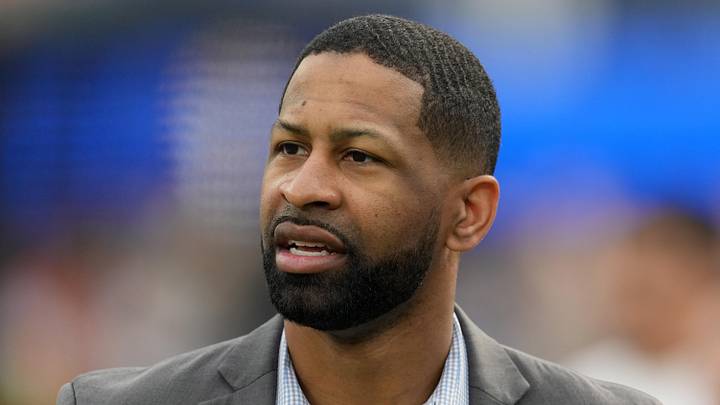
In the initial hours after pulling off one of the biggest trades in NFL history (again), Cleveland Browns GM Andrew Berry revealed a truth bomb that fans shouldn’t ignore.
"It wasn't like a Plan A going into the offseason,” Berry said of moving Myles Garrett, who even at age 30 stood as one of the NFL’s most valuable player assets, “but quite honestly, we would have operated differently if it was.
“But sometimes things come across your path that you're just, you're not expecting, and you can't be so dogmatic in your strategy and planning that you can't adjust and be flexible to great opportunities."
While Berry has been mostly lauded for the blockbuster trade that sent Garrett to the Los Angeles Rams in exchange for Jared Verse, a 2027 first-round pick, and two future Day 2 selections, he doesn’t get the benefit of operating in hindsight. The harsh reality is that, after settling on Todd Monken as the team’s new head coach, the Browns made a series of moves designed to help him succeed in Year 1. Had Berry known that Garrett would be traded on the night of June 1, the approach to March and April would undoubtedly have looked different.
With that in mind, here are a handful of moves that Berry might want back after the surprising opportunity arose to actually set a Garrett trade in motion.
The Browns spent March and April building around Myles Garrett before a blockbuster opportunity changed everything
Passing on a deep edge class in the 2026 NFL Draft
For teams in need of pass rushers and all-around edge defenders, 2026 was a good year to hold extra draft capital. After five edge players were selected within the first 31 picks, another six flew off the board during the first half of the second round.
The Browns made two selections in that range, coming away with wide receiver Denzel Boston at No. 39 overall before trading up to score defensive back Emmanuel McNeil-Warren at pick No. 58.
Cleveland most notably passed on four edge defenders in R Mason Thomas, Cashius Howell, Derrick Moore, and Zion Young. All four were essentially taken immediately after the Browns settled on Boston.
Every draft class comes with second-guesses, and the decision to double-up at wide receiver — the Browns had just taken KC Concepcion in Round 1 — and pass on a potential prime running mate for Verse could be one fans point to as a blunder in a few years.
With all the smoke around a Garrett trade following the team’s not-so-subtle contract adjustment that delayed a 2026 bonus payment from March to September, it would have made sense for Berry to cover his bases on a depth chart that was already thin behind Garrett. He opted for the more offensive-minded approach with an eye on supporting Monken, and it’s fair to wonder if he’d do the same thing again knowing how the near future would play out.
Committing over $32.3 million in guaranteed money to free agent guard Zion Johnson
The decision to trade Garrett made Cleveland's current direction impossible to ignore. Few NFL teams roster more players under the age of 25. This will be a young team that hopefully has a bright future, but 2026 now stands as the clear pivot point. Despite Monken’s excitement, the Browns entered a clear developmental year the second Garrett touched down in L.A.
That brings the team’s overhauled offensive line into the spotlight. Speaking during the final week of OTAs, Monken confirmed four of the team’s five starters, with No. 9 overall pick Spencer Fano at left tackle. The left guard? That appears to be Zion Johnson, who the Browns signed to a three-year, $49.5 million contract in March with $32.3 million in guarantees.
That felt like a sizable investment in a mid-tier interior lineman at the time, but it looks even worse now, after the team assembled several younger and cheaper options like Austin Barber, Parker Brailsford, and Teven Jenkins. The Browns later added a more proven vet in Elgton Jenkins for well less than half of Johnson’s guaranteed money ($15 million).
Elgton Jenkins gives the Browns several potential combinations, with the most prominent being at left guard. He earned a pair of Pro Bowl nods while manning that spot for the Green Bay Packers. With Garrett out, the Browns could have leaned into their youth movement with a starting five of Fano at left tackle, Elgton Jenkins at left guard, Brailsford or veteran Luke Wypler at center, Barber or the returning Teven Jenkins at right guard, and Tytus Howard at right tackle.
Berry did fine work to overhaul the offensive line in short order, but the Johnson signing always felt like an overly reactionary move to the uncertainty surrounding Joel Bitonio. Johnson will have to play extremely well and stick with the Browns for the long haul to make this year’s big investment worth it.
Hiring Todd Monken over multiple other young, ascending candidates
Since being named the Browns head coach, Monken has been extremely likeable and easy to root for. The Garrett situation has made his first four months on the job extremely awkward, and that doesn’t necessarily change following the trade.
Cleveland just hired a 60-year-old, first-time NFL head coach only to trade the game’s top game-wrecker and fully embrace one of the youngest rosters in football. How much runway Monken gets remains to be seen, but he’s certainly not set up to win now.
Berry has referred to the word “timeline” often while rationalizing the decision to trade Garrett. Verse, as a 25-year-old edge defender still on a rookie contract, fits that timeline. The Browns leveraging their surplus in draft capital into another top quarterback prospect would fit that timeline. Monken? By the time this team is fully ready to compete with the Bengals and Ravens for AFC North titles, he could be pushing his mid-60s.
The Browns gave young, ascending coaches like Nate Scheelhaase and Grant Udinski a long look this offseason before ultimately settling on Monken. They picked the coach that will help them win as many games as possible in the short term. They probably passed on the better option to gradually build a program and grow alongside one of the youngest rosters in the NFL, though.
If patience wanes and Browns owner Jimmy Haslam chooses to end Monken’s tenure after two or three years, a pivot back to square one would essentially blowtorch whatever timeline Berry's envisioning.
 Add us as a preferred source on Google