

On Monday, March 2, the Cleveland Browns decided to throw the Houston Texans a bone and send them a fifth-round draft pick for a player they were seemingly on the verge of releasing otherwise. That would be none other than soon-to-be 30-year-old offensive lineman Tytus Howard. There's a laundry list of reasons to squint at this deal for the Browns, and ESPN's Seth Walder didn't mince words when discussing it.
Walder slammed the Browns with a D-plus grade for their acquisition.
"Howard ranked in the 24th percentile in pass block win rate at tackle and the 31st percentile in run block win rate at tackle last season. He was also below average in both in 2024. That hasn't always been the case — Howard ranked in the top 10 overall in pass block win rate at tackle in 2021 and 2022. But we're several seasons removed from that, and he scored poorly in run blocking in each of those seasons."
This discrepancy exemplifies one of the greatest issues in the current analytics-heavy NFL ecosystem. How can fans reconcile ESPN giving Howard such unimpressive rates, particularly when it comes to pass block win rate, while Next Gen Stats claims Howard had the best season of his career with only a 4.8 percent pressure rate allowed? For what it's worth, the tiebreaker could be Pro Football Focus, which gave Howard the 17th-best pass block grade in 2025 (77.1); though, they also gave him a below-average 62.7 grade overall (58th of 89 qualifying offensive tackles).
The reality of the situation is that Tytus Howard, in a vacuum, is not a horrible player who has no business on an NFL roster. The idea that the Cleveland Browns see themselves as the kind of team in the competitive and financial position to give up a draft choice for a player of his age and caliber — while also handing him a hefty extension (two years, $45 million, starting in 2027) — is what reeks of delusion.
This wasn't lost on Walder, either.
"So the Browns are likely getting a below-average starter," he wrote. "And he isn't cheap. ... The Browns sat at less than $1 million under the 2026 cap prior to this deal, per OverTheCap.com, though their cap obligations lighten quite a bit in 2027. But is this where they want to spend their resources, dealing a fifth-round pick to pay what might be an over-market deal for a below-average starter? That's not how I'd want to kick off the offseason."
Another thing that makes such a move dumbfounding is the fact that free agency is only a week away. Anyone can see the reason the Texans would have urgency getting this deal done, as it saved them some money they can put to use when free agency starts. The Browns' eagerness? Less sensible. They could have scoured the free agent market for good deals on younger players and kept their fifth-round pick, too.
It's also worth mentioning that some, including CBS Sports' Jonathan Jones, have made the case that with Cleveland being a less-than-attractive free agent destination, they should be commended for making a deal like this, as otherwise they would possibly need to overpay in free agency. The idea that overpaying in free agency would be too catastrophic while overpaying via trade is not exactly the soundest reasoning.
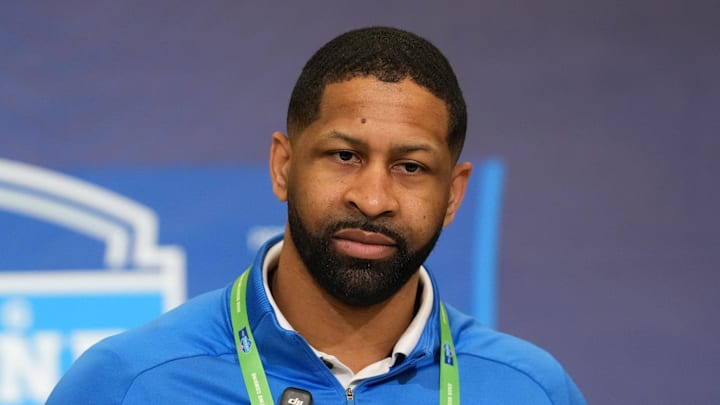
Each time the Browns make a move like this, fans have come to realize they are digging themselves into a deeper hole. The most logical way out of their current predicament has always been hoarding draft picks in an attempt at hitting on young, cheap talent while Andrew Berry's crippling cap moves of days gone by take their course. With each move, though, Berry is insistent on making the Browns' future cap situation more cumbersome.
It's what Browns fans have come to expect from an executive whose seat is scorching hot after back-to-back sub-six-win seasons. That doesn't make it any more palatable for the fans who suffer through the disappointment, without a penny in return for their plight.
 Add us as a preferred source on Google