

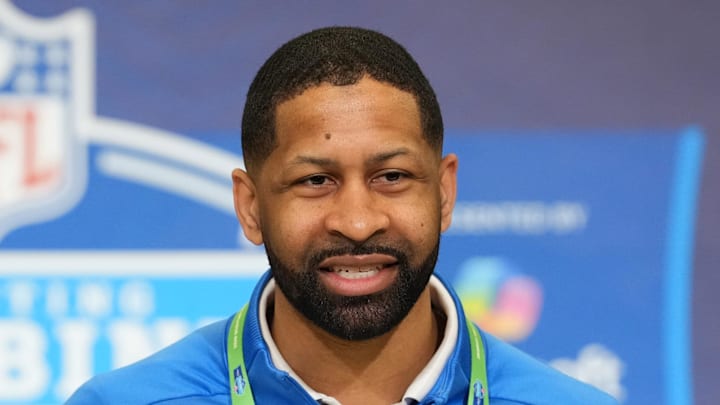
The Cleveland Browns’ complex 2026 salary cap situation finally came into focus over the weekend. The team not only officially signed their top external free agents, but absorbed all the dead money from their many departing veterans on voided contracts or post-June 1 releases.
As GM Andrew Berry has stated throughout the process, the Browns are healthier from a cap perspective than the national media would've led you to believe.
While the team’s $71 million in 2026 dead money (fourth highest in the NFL) is a justified sticking point with fans, Cleveland’s cap space just ballooned from around $9 million to $21.1 million, basically overnight, according to Over the Cap's projections. The team is set up well to not only compete for second-wave free agents, but to be active in the trade market and sign what should be double-digit draft picks and UDFAs in April.
Two key factors led to the Browns’ sudden influx of cap space, and Berry only really deserves credit for one of them. The first came via the NFL’s annual adjustments, which often include credits for injury insurance, likely to be earned incentives that were missed, and certain language around player bonuses. The Browns, most likely due to Deshaun Watson missing half of 2024 and all of 2025 due to injuries, received a $17.8 million credit, which was the third-highest in the league.
2026 Salary Cap Adjustments for each NFL team have been announced, providing significant cap space for the Titans, 49ers, Browns, and Cardinals, while Buffalo, Seattle, Carolina, and the Giants took small steps backwards. pic.twitter.com/PPvsItgDeQ
— Spotrac (@spotrac) March 13, 2026
The Browns then cleared even more space when they officially processed Tytus Howard’s two-year, $45 million extension. According to NFL reporter Aaron Wilson, Berry structured the contract with four voidable years — a Cleveland staple during his tenure — allowing the team to prorate his signing and option bonuses over multiple years and lower his cap numbers to $5.9 million in 2026, $10 million in 2027, and $16.9 million in 2028, per OTC.
Cleveland’s previous cap projections included a $17.9 million placeholder for Howard’s contract, so his extension cleared an additional $12 million in expected cap space.
Andrew Berry and the Browns have no excuses entering the next phase of the offseason
Browns fans have been waiting for their front office to address the skill positions on offense, as well as the quarterback room, and they definitely shouldn’t buy the salary cap as an excuse.
The Browns already have enough cap space to sign their projected 2026 draft picks, and they could open up another $12-plus million with a simple base salary restructure in Denzel Ward’s contract.
Really, the team’s recent influx in cap space should allow Berry to seek improvements via the trade market. This year’s subpar quarterback market dried up quickly over the first wave of free agency, but Cleveland could still check in with teams like the Eagles for Tanner McKee, or the Colts for Anthony Richardson. They have slightly more options at wide receiver, with a bunch of veterans like Jauan Jennings, Stefon Diggs, Hollywood Brown, Deebo Samuel, and Christian Kirk still available.
Berry did an admirable job during Phase I of the offseason, navigating a coaching staff overhaul while setting the team up for success with some strong additions for the offensive line. That work is far from finished, though, and the team has all the cap flexibility it needs to make more moves, assuming owner Jimmy Haslam is ready to approve the actual real-cash commitments.
 Add us as a preferred source on Google