

When it comes to GM Andrew Berry and the Cleveland Browns, a large part of the discussion will naturally revolve around the salary cap, and what levers the team has at its disposal.
On the eve of the 2026 NFL Draft, the Browns rank top-20 in available cap space, per Over the Cap, with an estimated $21.5 million. From a 10,000-foot view, that's hard to fathom, considering quarterback Deshaun Watson’s $80 million-plus cap number was the most in football entering the offseason, and one of the Browns’ first moves of 2026 was to trade for, and extend, right tackle Tytus Howard.
But while Berry hasn’t yet earned the right to walk on water in Cleveland, he works the NFL’s cap game at an Ivy League level. The Browns’ cap number is never what it seems. Even now, they have around $12 million in potential space on the table via a restructure of cornerback Denzel Ward’s contract. In early March, they cleared $36 million in 2026 cap space with a simple salary conversion in Watson's deal.
When it comes to the Browns’ financials, the only numbers fans should be paying attention to are the real ones — as in, the team’s real cash spending. There’s no fudging those numbers, and they help paint a much more accurate picture of what could come next — and draft weekend especially.
The Browns’ Day 1 draft strategy may come down to money, not talent
Since 2021, the NFL’s salary cap has risen each year, spiking with a 14-percent increase in 2022 and another 13.6 percent in 2024. Over that same five-year span, the Browns have spent over the league’s cap number by an average of $54.3 million per season, according to Spotrac’s historical data. The Browns ranked top-three in the NFL in real cash spending from 2021 through 2024, including sitting atop the chart in back-to-back years (2023 to 2024).
Cleveland Browns cash-over-cap spending since 2021, via Spotrac:
League Year | NFL Salary Cap number | Real cash spending | NFL cash spending rank | Total cash over salary cap |
|---|---|---|---|---|
2026 (to date) | $301.2M | $302.2M | 12th | +$1M |
2025 | $279.2M | $319.6M | 7th | +$40.4M |
2024 | $255.4M | $345.6M | 1st | +$90.2M |
2023 | $224.8M | $293.5M | 1st | +68.7M |
2022 | $208.2M | $278.05M | 3rd | +69.9M |
2021 | $182.5M | $238.9M | 3rd | +$56.4M |
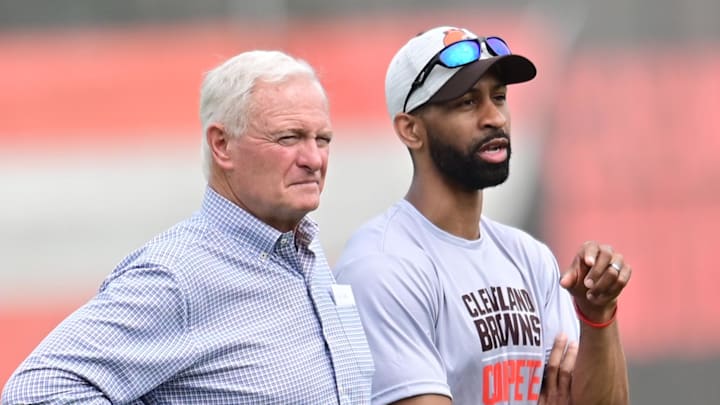
Watson’s fully-guaranteed, $230 million contract signed in 2022 definitely played a part in these figures, but so have major deals for Ward and Myles Garrett. NFL fans will say what they will about the Browns and owner Jimmy Haslam, but spending hasn’t been an issue over the last five years; if anything, the Haslams have been fully invested in the Browns from a financial standpoint.
But every business has a budget, and per Spotrac, the Browns are already over the NFL’s 2026 salary cap number of $301.2 million. They spent a whopping $90.2 million over the cap during their “all-in” year in 2024, and reset slightly in 2025, giving all seven of their draft picks (and some undrafted rookies) significant playing time while spending $40.4 million over the cap overall. That equates to a 55 percent year-over-year decrease in spending.
Holding nine total selections in this year's draft, it would not be a surprise to see the Browns look to reduce spending once again in 2026. Prior to the start of free agency, Berry told reporters that the team was a year away from being "hyper-aggressive” in terms of spending, and some major savings can be found during the draft, especially on Day 1.
The NFL began scaling rookie salaries based on each individual draft slot in 2011 to help save teams from overpaying for an unproven rookie, in turn opening up more opportunities for veterans to get paid. It also allows teams to plan for the price of their entire rookie class. Per Over the Cap, the Browns’ 2026 class, which includes two first-round selections, will cost them $12.1 million in immediate cap space.
What will each 2026 draft class really cost against the cap?
— SFdata9ers🏈📊 (@sfdata9ers) April 21, 2026
1. NYJ $15.9M
2. NYG $14.9M
3. LV $12.8M
4. CLE $12.1M
5. ARI $11.5M
...
30. GB $1.9M
31. ATL $1.8M
32. DEN $1.4M
Data: OTC (04/21/2026) pic.twitter.com/fFA10XpX7V
But with the majority of early-round draft picks earning more than half of their total salary up front in the form of a signing bonus, the Browns would be committing to some major checks if they stick in the No. 6 spot and leave Day 1 with two selections. This year’s No. 6 overall pick will receive a four-year, $40 million contract that’s fully guaranteed; Las Vegas Raiders running back Ashton Jeanty, last year’s No. 6 overall pick, earned $23.5 million in cash in 2025 despite a $6.5 million cap hit, per Spotrac.
So, again, this Browns offseason projects to be much more expensive than the salary cap numbers currently show, and that’s the major reason why fans should be buying the buzz around the team trading out of the No. 6 spot. It might have nothing to do with the Browns’ scouting report on Utah offensive tackle Spencer Fano or Ohio State wide receiver Carnell Tate. Trading from No. 6 down outside of the top 10 would net Cleveland extra draft capital (which could be used to add more players on team-friendly contracts) while saving around $10 million in real cash for the franchise’s 2026 bottom line.
It’s fun to get lost in the hypothetical world of mock draft season and scheme up trade-back scenarios with the Browns making three first-round picks. We’ve had fun in that world here at Dawg Pound Daily.
But it all comes down to ownership. The Haslams have spent $325 million-plus over the salary cap in real cash spending since the 2021 season, and it would not be surprising to see the team target moves that save money both in the short and long term, starting with Thursday night.
 Add us as a preferred source on Google